
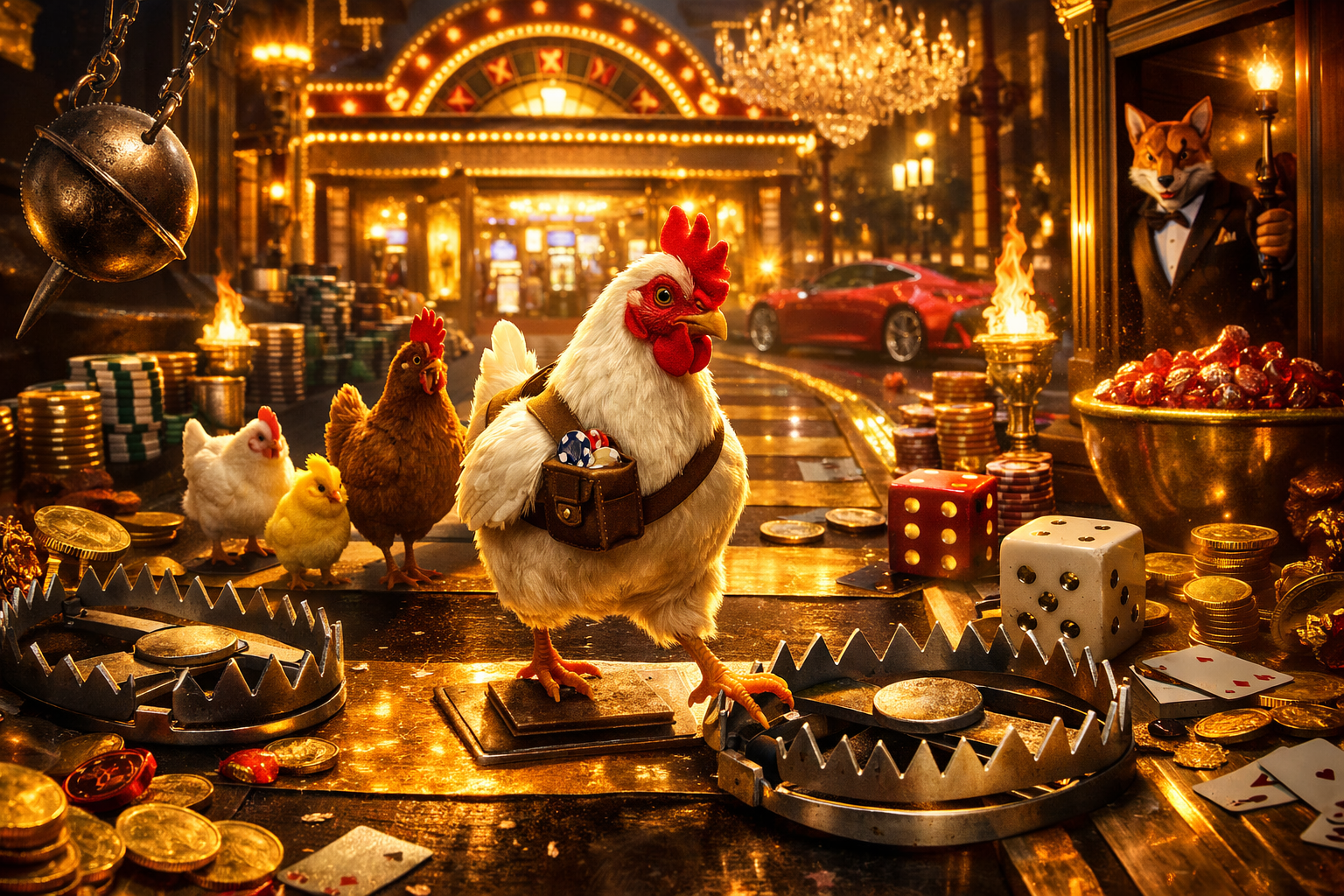
Why Did the Chicken Really Cross the Road?
In the world of quirky online games, few concepts are as strangely compelling as guiding a chicken across a busy road. At first glance, the premise feels silly—almost like an old joke brought to life. But beneath the surface, there’s something deeper going on. The chicken isn't just crossing for fun. It’s moving forward with purpose, dodging chaos and gambling with each step. The tension between innocence and danger creates an oddly human narrative in a very non-human form.
This is where the Chicken Road slot finds its charm. It doesn't just offer a chance to win big—it builds a story, however minimal, that feels oddly familiar. Each game round becomes a journey, not unlike the choices people make every day. The chicken isn’t passive. It’s acting with a kind of desperate courage, inching toward something better, one lane at a time. The road ahead may be full of speeding cars and uncertain timing, but staying still isn’t an option.
What’s most interesting is how the game uses a familiar idea—crossing the road—as a metaphor for risk-taking. Everyone knows the joke. But here, it’s turned into a digital tightrope walk where hesitation and boldness are always at odds. The question of "why" becomes less about comedy and more about drive. The chicken is more than a punchline. It’s the player’s avatar in a world where the only way forward is through danger.
Traps, Traffic, and the Thrill of the Dodge
The road in Chicken Road is no ordinary stretch of pavement. It’s a gauntlet packed with unpredictable threats. Every lane holds a new risk, from rushing vehicles to the creeping threat of a fiery end. The longer the chicken stays alive, the more intense things get. The path is littered with traps designed to test the player’s nerve and decision-making. The game thrives on tension, forcing quick choices and rewarding smart exits.
These dangers are not just obstacles—they’re the core of the experience. Players are tempted to keep going, always chasing a higher multiplier. But with each second, the possibility of losing it all grows. This is where the game mimics real-life gambling temptations. The push-and-pull between greed and caution keeps players on edge. Every trap is also an invitation, and that makes survival feel like a victory, not just a tactic.
Even the visual design reinforces this emotional tug-of-war. The road stretches endlessly, framed by movement and uncertainty. The traps are sudden but not unfair. They’re reminders that every reward in the game is hard-won. There’s no autopilot in Chicken Road. Every step demands attention, and every delay invites destruction. That thrill—of dodging disaster by a split-second—is what makes the game more than just a quirky concept.
Who's in Control
Control is at the center of Chicken Road’s appeal. On one level, the player is guiding the chicken, making decisions about when to move and when to cash out. But the gameplay often creates the sensation that the chicken has its own will. It responds quickly, darts with urgency, and seems to know when the danger is near. This blurring of control makes the experience more immersive and unpredictable.
Agency in a game like this is never straightforward. Players are the ones clicking, yes—but the environment dictates so much. Cars fly by in patterns that feel random, and the fire creeps forward without warning. The game seems to push back against the player’s confidence, making them question every instinct. That challenge is part of the thrill. It’s a mental tug-of-war between trust and doubt.
The chicken becomes more than a vehicle for gameplay. It becomes a character—one that reflects the player’s mindset in real time. Hesitation makes it stall. Overconfidence pushes it too far. There’s a strange emotional loop where the chicken's fate mirrors the player's choices almost too perfectly. The sense of agency is thin but present, giving each run an emotional weight that lingers beyond the session.
Where Luck Meets Instinct
The gamble in Chicken Road is not just about crossing a road—it’s about knowing when to stop. The game rewards players who can read the moment and act fast. Multipliers rise as the chicken progresses, tempting players to hold on for just a few more steps. But every second adds danger. The margin between profit and loss grows thinner with every lane crossed. That razor’s edge is where instinct meets luck.
There’s no way to predict exactly when the run will end. That uncertainty is the game’s hook. It taps into something primal—the thrill of guessing right, the sting of being wrong. Players may think they’re being strategic, but the game reminds them how quickly things can change. This constant tension fuels the adrenaline, turning each session into a small emotional rollercoaster.
But Chicken Road doesn’t just rely on randomness. The smartest players begin to sense patterns, reading the game’s tempo, and responding to its rhythm. They learn when to trust their gut and when to play it safe. That balance makes the experience rewarding even without a win. In the end, it’s not just about cashing out—it’s about feeling like you made the right call, even if the flames eventually catch up.

